1Partial frost on the evaporator coil
When refrigerant is low, only part of the coil gets cold. You may see frost on one corner and none on the rest.
How we fix it: We check pressures and temperatures across the coil to confirm.
If your fridge runs but never gets truly cold, it may be losing refrigerant. Our sealed system repair service in La Mesa finds the leak, fixes it, and recharges the system the right way, with EPA-certified methods. We offer same-day diagnosis and a 24-hour line. If you searched “refrigerator Freon recharge near me,” here is what you need to know first.
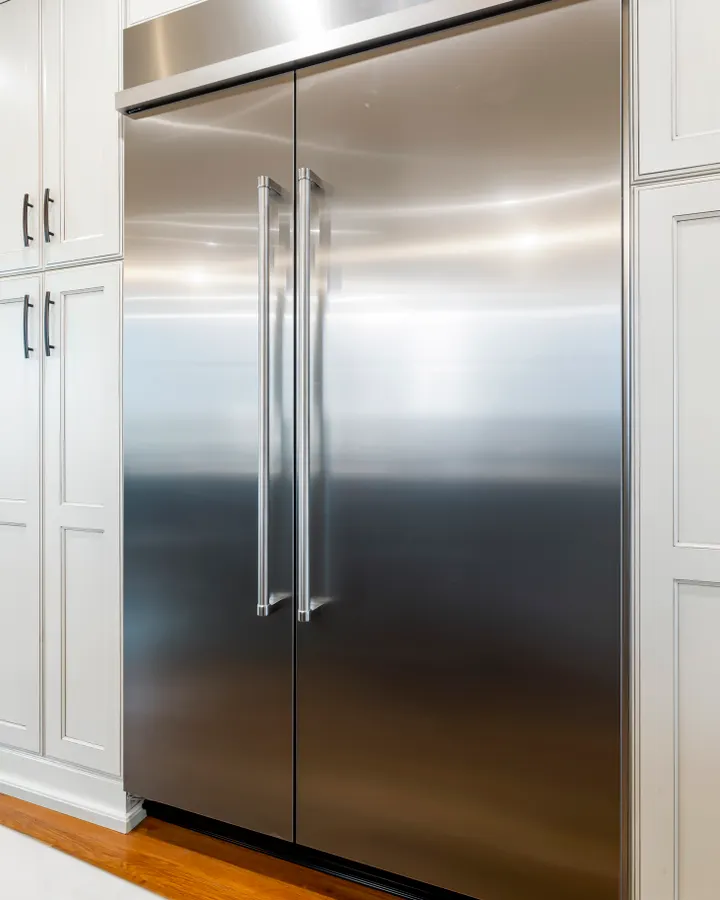
The sealed system is the closed loop that makes cold. It includes the compressor, the condenser coil, the evaporator coil, a thin capillary tube, a filter drier and the refrigerant that moves through all of them. It is sealed at the factory and should never need a top-off.
That last part is important. A fridge does not use up refrigerant like a car uses gas. If it is low, there is a leak. Adding refrigerant without fixing the leak only buys a few weeks. That is why we always find the leak first.
Most older fridges use R-134a. Most newer ones use R-600a, also called isobutane. R-600a is flammable, so it needs special tools and care. Federal rules under EPA Section 608 also require certified techs to handle refrigerant. Home “recharge kits” are not a safe or legal fix for a fridge.
Not sure the problem is refrigerant? Start with our refrigerator not cooling guide. Most warm fridges have simpler causes.

These clues point toward a leak or blockage instead of a fan or sensor issue.
When refrigerant is low, only part of the coil gets cold. You may see frost on one corner and none on the rest.
How we fix it: We check pressures and temperatures across the coil to confirm.
Refrigerant carries a little oil. A leak often leaves an oily stain at the leak point.
How we fix it: We confirm the leak with an electronic detector or bubble test.
A steady hiss near the back can mean gas escaping.
How we fix it: We trace the sound to the tube or coil.
Low charge means the fridge cannot move enough heat, so it never shuts off.
How we fix it: We rule out coils and fans first. See Condenser Coil Cleaning.
Moisture or debris can block this tiny tube and stop the flow of refrigerant.
How we fix it: We clear or replace the restriction and install a new filter drier.
A compressor that fails inside means opening the sealed system to replace it.
How we fix it: We confirm with tests. See Compressor Repair.
Sealed system work is never a DIY job, but these checks help us know what to expect.
A proper sealed system repair takes more steps than a quick top-off. Here is what we do, and why it lasts.
| Step | What we do | Why it matters |
|---|---|---|
| 1. Leak search | Electronic leak detector, bubble test or pressure test | Recharging a leaking system wastes money |
| 2. Recover | Remove any refrigerant left in the system | Required by EPA rules |
| 3. Repair | Braze the leak or replace the coil, tube or compressor | Fixes the real cause |
| 4. New filter drier | Replace the drier every time the system is opened | Stops moisture and debris |
| 5. Vacuum | Pull a deep vacuum to remove air and moisture | Moisture causes blockages later |
| 6. Weigh in charge | Add the exact factory amount by weight | Fridges use very small charges |
| 7. Test run | Check temperatures and pressures over time | Confirms the fix holds |
We check fans, coils and sensors so you don’t pay for sealed work you don’t need.
We locate the leak or blockage and show you.
We tell you honestly if a new fridge makes more sense.
We fix, evacuate, recharge by weight and test.
Sealed system repair is most worthwhile on built-in brands like Sub-Zero, Thermador, Viking and Miele, which are built to be serviced for decades.
We provide sealed system repair in every part of La Mesa and these nearby areas.
These services are closely tied to refrigerant and compressor health.
Clicking, humming or a fridge that runs nonstop and still stays warm.
Learn moreWarm fridge, cold freezer, or both warm. We find the failed fan, sensor or airflow problem.
Learn moreCleaner coils, cooler running and a longer compressor life.
Learn morePanel-ready, column and integrated units from luxury brands.
Learn moreSoft ice cream, thawing meat or a freezer that never shuts off.
Learn moreBuzzing, grinding, clicking, rattling or loud humming.
Learn moreSome problems have simple fixes. These guides show you what to check first.
Lifespan by type and brand, plus a simple repair-or-replace rule.
MaintenanceA simple monthly, seasonal and yearly plan to keep your fridge running longer.
Clear answers about Freon, leaks and recharges.
Not as normal upkeep. A fridge is a sealed system. If it is low on refrigerant, there is a leak that must be fixed first.
Common signs are a fridge that runs nonstop but stays warm, frost on only part of the evaporator coil, oily spots on tubing or a hissing sound.
No. Fridges use tiny, exact charges, newer ones use flammable R-600a, and federal EPA rules require certified techs to handle refrigerant.
Most older models use R-134a. Most newer models use R-600a. The type is printed on the label inside the fridge or on the back.
Most take two to four hours. A compressor replacement or special-order coil can take longer.
On built-in luxury models, usually yes. On a standard fridge over 12 years old, replacement is often the better value. We give you both numbers.
Don’t pay for a top-off that won’t last. Call for same-day sealed system diagnosis and EPA-certified refrigerant repair in La Mesa.